GTC Program Brings Together Young Participants from 20 Countries at China Agricultural University
On July 11, 2026, an international exchange event under the Global Talent Certificate Program (GTC Program) was held at the East Campus of China Agricultural University in Beijing. Following coordination with the team responsible for the relevant sustainable development initiative at the university, the GTC Program has been formally included as an International Decade of Sciences for Sustainable Development Series Activity.
International Exchange Event Explores Global Perspectives, Cross-Cultural Competence and Youth Cooperation in the Age of AI
On July 11, 2026, an international exchange event under the Global Talent Certificate Program (GTC Program) was held at the East Campus of China Agricultural University in Beijing. Following coordination with the team responsible for the relevant sustainable development initiative at the university, the GTC Program has been formally included as an International Decade of Sciences for Sustainable Development Series Activity.
Under the theme “Global Collaboration and Cross-Cultural Competence Development in the Age of Artificial Intelligence,” the event combined online and in-person participation. It brought together 80 registered participants from 20 countries, with total participation approaching 100.
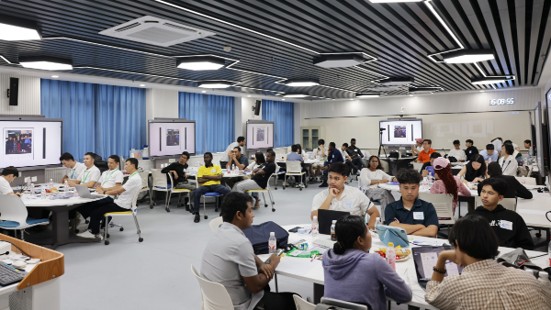
On-site of the GTC Program Activities
Participants came from China, Uzbekistan, Pakistan, Thailand, Armenia, Malaysia, Yemen, Burkina Faso, Nigeria, Tanzania, Mali, the Republic of the Congo, Iraq, Togo, Kenya, Ghana, Gabon, Madagascar, the United States and Bangladesh.
The Service Platform for International Professionals participated in the planning and organization of the event. Liwei Zheng, FRSA, Director of the International Academic Organizations Alliance (IAOA), moderated the program.
Professor Yuguang Zhou, Director of the Office of International Cooperation at the College of Engineering, China Agricultural University, delivered opening remarks online. He welcomed the speakers and young participants and highlighted the value of combining professional education with the development of cross-cultural competence.
Professor Zhou noted that, amid rapid scientific and technological change and increasingly interconnected global challenges, talent development should not be limited to professional or disciplinary knowledge. Greater attention should also be given to international understanding, communication skills and a willingness to cooperate across cultural and national boundaries.
Seeing the World: Developing a Global Perspective
Guangming Su, Chair of the China–Netherlands Special Committee under the Expert Committee on Science and Technology Diplomacy, delivered a presentation entitled “Global Perspectives for Youth Development: See the World, Understand the World and Realize Your Potential.”
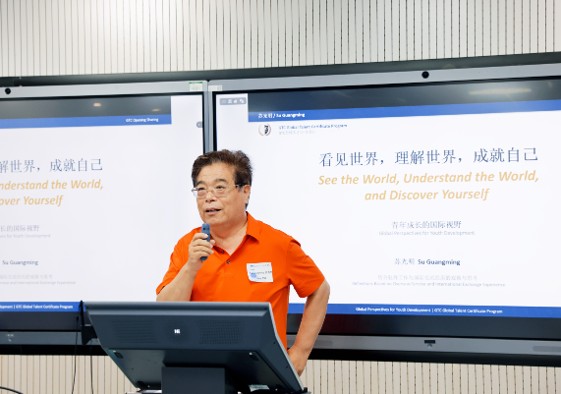
Su Guangming Shares the International Vision Required for Youth Development
Su has long been engaged in international talent exchange and science and technology diplomacy. He previously served as Director of the China International Talent Exchange Foundation and as Science and Technology Counsellor at the Embassy of the People’s Republic of China in the Kingdom of the Netherlands.
Drawing on his extensive international experience, Su emphasized that the development of young people cannot rely solely on classroom learning. It also requires active engagement with different countries, cultures and social environments.
He observed that having a global perspective is not simply a matter of how many countries a person has visited. More importantly, it involves understanding the historical and social contexts in which different institutions, cultures and ways of life have developed.
Such understanding enables young people to respect differences, identify common ground and make more open-minded and rational judgments when facing complex international issues.
Su encouraged international students in China to learn Chinese, engage with local communities and develop a fuller understanding of the country. He also encouraged young people to value opportunities to communicate with peers from different national and cultural backgrounds and to gradually strengthen their capacity for understanding, judgment and international cooperation.
Understanding the World: Moving Beyond Language and Familiar Experience
Andrew Zhao, International Education Expert, delivered a presentation entitled “How Far Is It from Your World to the Outside World?”
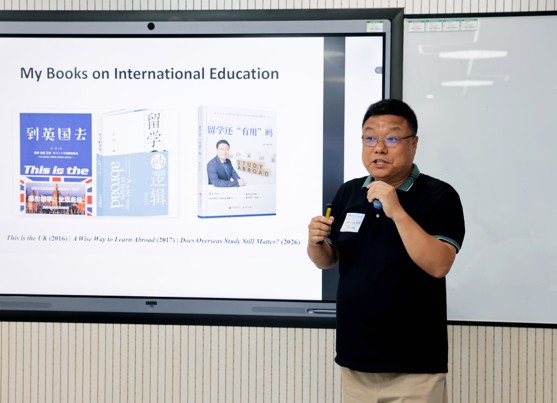
Drawing on his experience in international education and practical practice, Zhao Gang analyzes how young people understand the outside world.
Drawing on his experience of studying, interning and working in the United Kingdom, Zhao explored the distance between a young person’s familiar world and the wider world beyond it.
He discussed differences among countries in language use, social interaction, workplace relationships, attitudes toward rules and team culture. He noted that language ability is an important gateway into another culture, but speaking a language does not necessarily mean that a person has truly understood the culture behind it.
Zhao also emphasized the importance of practical experience in youth development. Classrooms can provide knowledge, while actual working environments help young people understand organizational relationships, communication norms and patterns of behaviour in different social settings.
In his view, genuine internationalization is not about simply imitating another culture. It requires young people to understand others while remaining grounded in their own cultural identity and to gradually develop the ability to learn, work and cooperate effectively in different cultural environments.
Connecting the World: Building Cross-Cultural Competence
Aling Gong, an Adviser to Educational Services Exchange with China (ESEC) and OPC Training Lead at the Microsoft-supported Shenzhen Go Global Center, led an interactive training session on Cross-Cultural Competence.
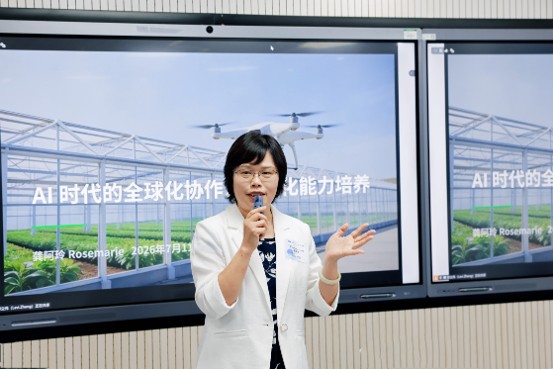
Gong Aling Conducts Interactive Cross-Cultural Competence Training
As one of the key initiators and contributors to the GTC Program, Gong has more than two decades of experience in cross-cultural training and corporate internationalization.
Using the classic cultural iceberg model, she explained that the visible elements of culture—such as language, clothing, etiquette and observable behaviour—represent only a small part of a much larger cultural system.
Values, attitudes toward time, perceptions of authority, decision-making habits and expectations concerning relationships often remain below the surface, yet they can exert a much deeper influence on communication and cooperation.
Gong also introduced the differences between high-context and low-context communication. To demonstrate the importance of context in everyday Chinese communication, she invited participants to interpret expressions such as “Let’s talk about it later,” “Use your own judgment” and “That is close enough.”
The exercise illustrated that literal translation—including translation generated by artificial intelligence—may not always capture a speaker’s attitude, emotions or intended meaning.
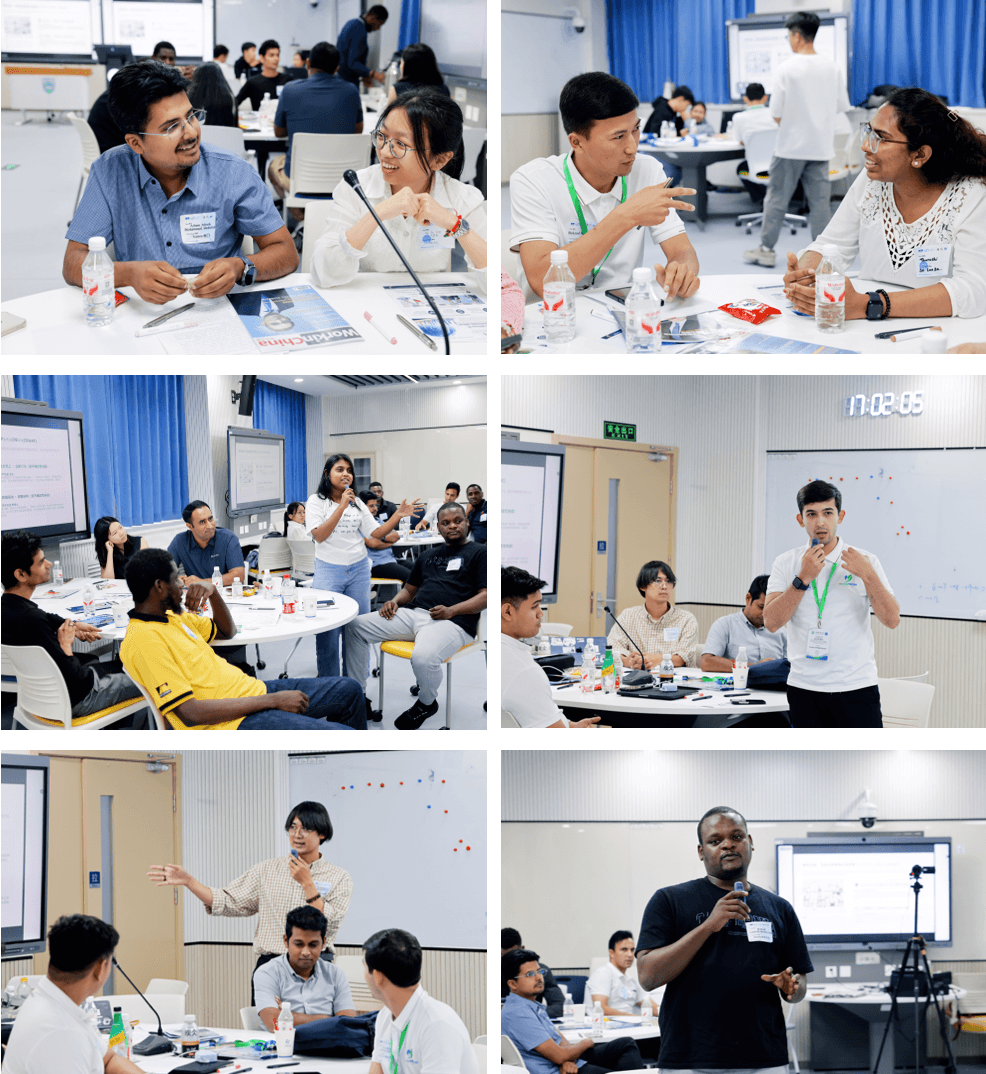
Participants from various countries held group discussions on agricultural risk decision-making.
During a case-based discussion, Gong presented an agricultural risk decision-making scenario. Participants were invited to consider scientific data, local experience, implementation costs and the possible consequences of different decisions.
A participant from Uzbekistan suggested adopting lower-cost protective measures on a limited scale while continuing to collect additional information.
A participant from Thailand observed that, when the level of risk is relatively low and the cost of intervention may exceed the potential loss, choosing not to take immediate action can also be a rational decision.
A participant from Bangladesh highlighted the trust gap that may exist between scientists and farmers. The participant argued that the application and dissemination of science and technology should begin by entering local communities and listening carefully to their practical needs.
Gong concluded that cross-cultural decision-making requires a balance among data, culture and context. The responsibility of a leader is not simply to demonstrate that one position is correct, but to help different participants build trust, develop consensus and work toward shared objectives.
She emphasized:
“Tools change every day, but professional judgment and an understanding of people will never be replaced by AI.”
Developing the GTC Program
During the event, Gong also introduced the background and development of the GTC Program.
Educational Services Exchange with China (ESEC), established in 1981, has long been engaged in people-to-people educational exchange between China and the United States.
The GTC Program plans to develop modular learning activities covering areas such as international rules, cross-cultural communication, project coordination and intellectual property. Its content will be gradually adapted to different academic, professional and industrial fields.
The program will explore a learning model combining online study, short-term international exchange, site visits, practical activities and documented records of participation and completion.
Designed as a non-degree capacity-building initiative, the GTC Program records participation and learning outcomes rather than conferring academic degrees, professional licences or government-recognized qualifications.
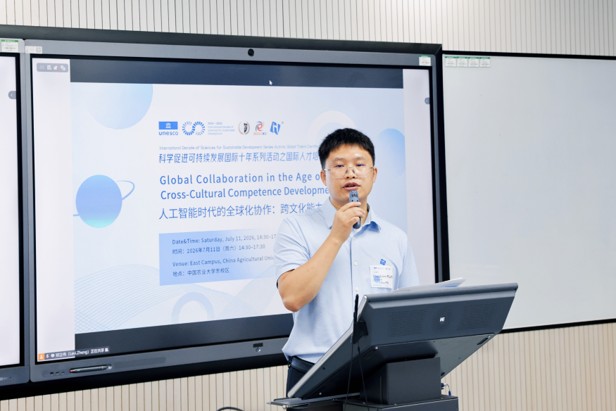
Zheng Liwei Speaks During the Summary Session
During the closing session, Liwei Zheng introduced the work of the International Academic Organizations Alliance and the ongoing development of Africa Open University (AOU).
He extended a special invitation to young participants from African countries, encouraging them to continue following and contributing to the development of AOU and to participate in the gradual formation of a pan-African network connecting young students, scholars, professionals and international partners.
From Seeing and Understanding to Connecting the World
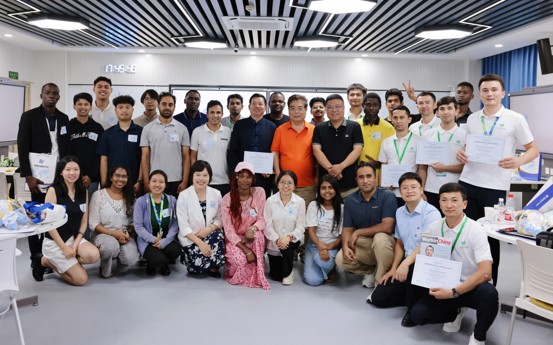
The event concluded with the presentation of GTC Program participation certificates and a group photo.
In his closing remarks, Zheng noted that the event was more than a lecture or a short training session. It created a meaningful connection among young people from different countries and cultural backgrounds.
Together, the three speakers presented a clear progression: Guangming Su encouraged participants to see the world, Andrew Zhao helped them understand the world, and Aling Gong invited them to consider how to connect with the world.
To grow by seeing the world, to advance through understanding it, and to create value by connecting with it—this reflects the approach to youth development and international cooperation that the GTC Program, Africa Open University and the International Academic Organizations Alliance seek to advance.