LMTA 2026 Successfully Held in Hong Kong, Advancing International Exchange on Large Language Model Technology and Applications
The 2026 International Conference on Large Language Model Technology and Applications (LMTA 2026) was held in Hong Kong from 24 to 26 July 2026. Bringing together scholars, researchers and professionals from universities and institutions in China and overseas, the conference provided a focused platform for academic exchange on large language models, intelligent systems and interdisciplinary applications of artificial intelligence.
The main academic programme took place on 25 July in a hybrid format, combining on-site participation in Hong Kong with online access. The conference featured three keynote speeches, two invited speeches and 21 oral presentations, together with poster displays and scheduled networking sessions. The programme reflected the rapid development of large language model technology and its increasing integration with robotics, agriculture, cultural heritage, creative technologies, education and other fields.
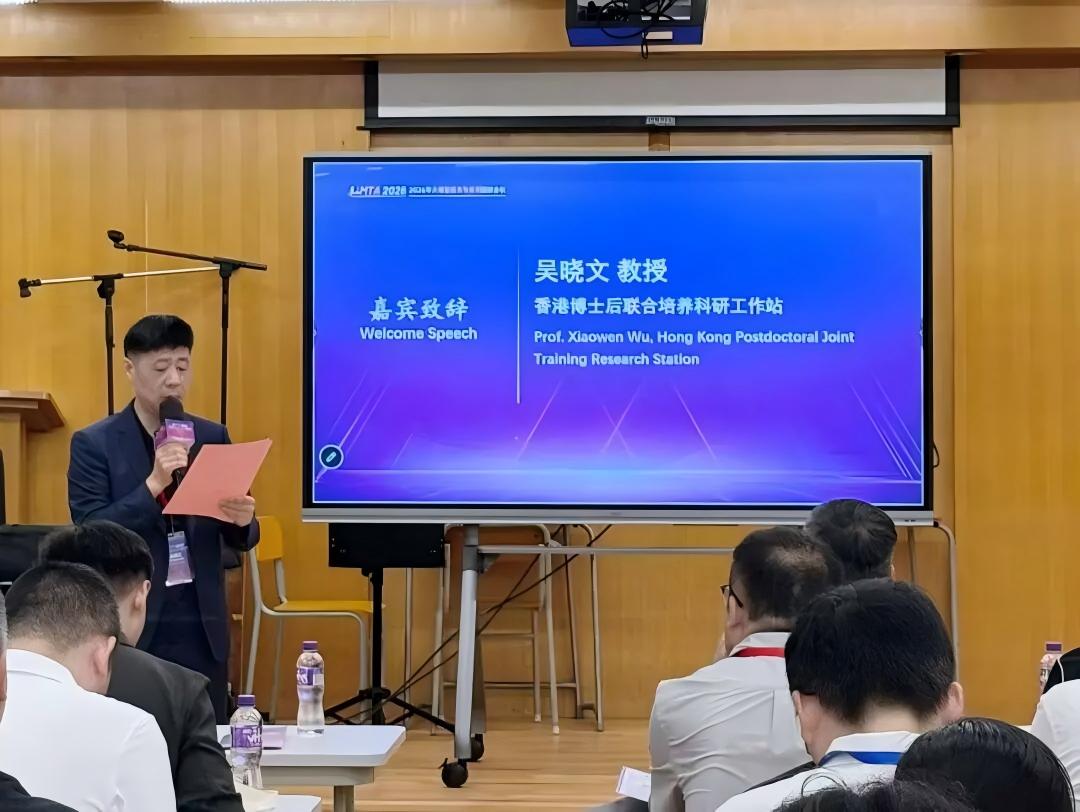
The opening of LMTA 2026 in Hong Kong.
Opening and Institutional Collaboration
LMTA 2026 was sponsored by the Hong Kong Institute of Educational Technology and Talent Innovation Development. The conference was organised by the Hong Kong Postdoctoral Joint Training Research Station and the Hong Kong Centre for Science, Technology and Innovation Development, with the International Academic Organizations Alliance (IAOA) serving as co-organiser.
At the opening session, representatives and participants welcomed the convening of the conference and highlighted the importance of sustained international academic dialogue in emerging areas of artificial intelligence. The event sought to connect frontier research with practical application and to create opportunities for scholars from different institutions, disciplines and professional backgrounds to exchange ideas.
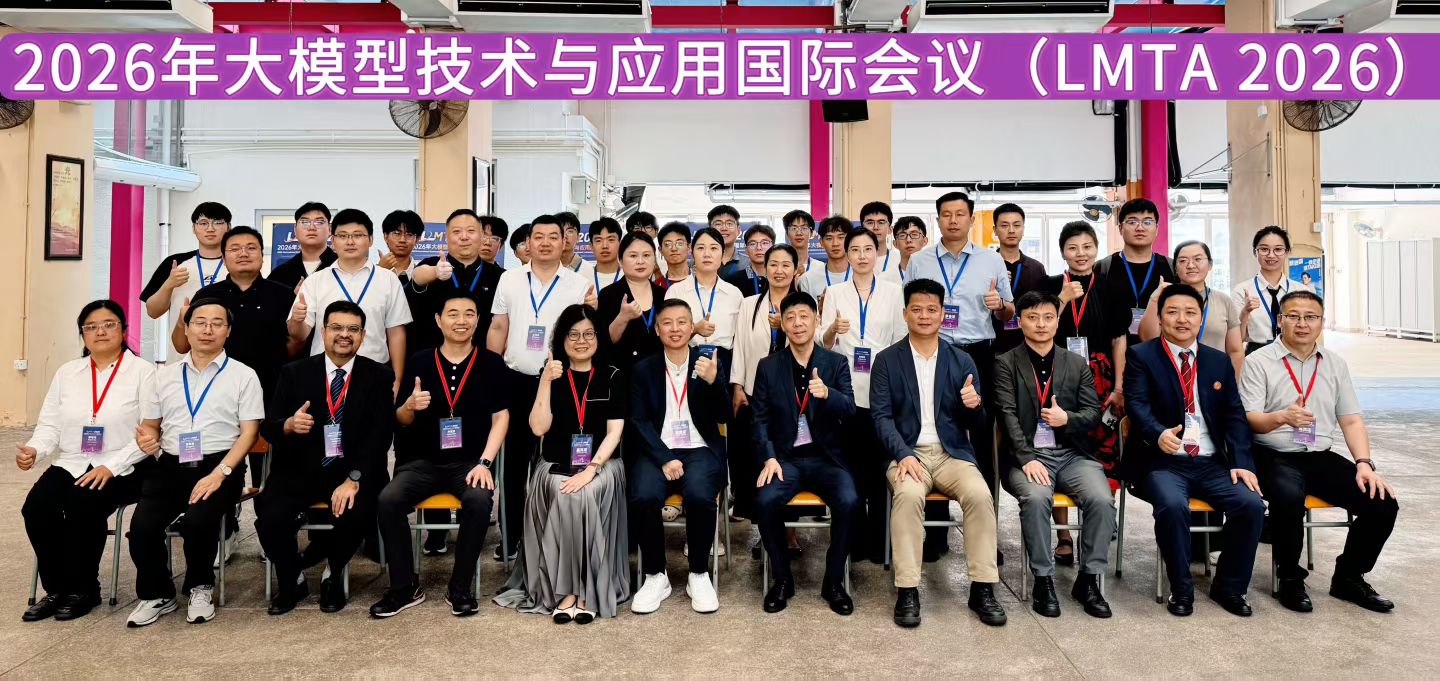
Following the opening ceremony, participating speakers, guests and delegates gathered for a group photograph, marking the formal commencement of the main conference programme.
Speakers, guests and participants at the LMTA 2026 group photo.
Keynote Speeches on Embodied Intelligence, AI Agents and Smart Agriculture
The keynote programme opened with a presentation by Prof. Yajing Shen of The Hong Kong University of Science and Technology entitled “Tactile-Enabled Embodied Intelligent Robots: Manipulation and Interaction.” The presentation explored the role of tactile perception in embodied intelligent systems and examined how robots can achieve more effective manipulation and interaction through integrated sensing, control and intelligent decision-making.
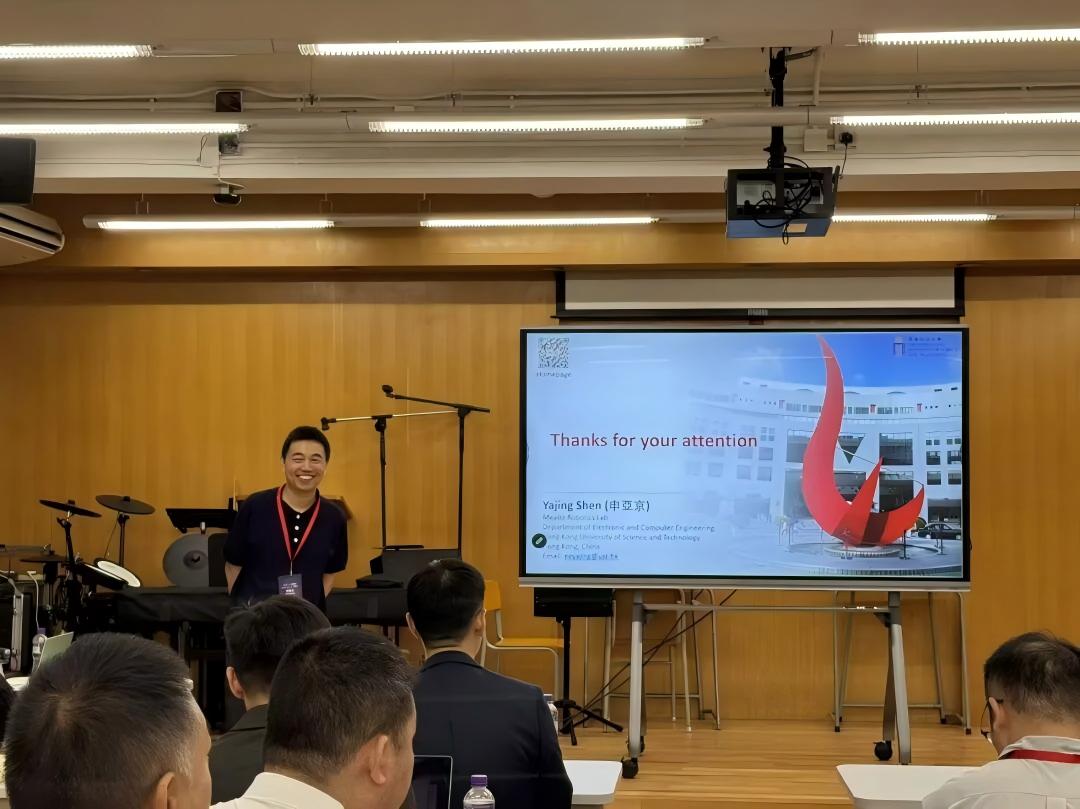
Prof. Yajing Shen delivers a keynote speech on tactile-enabled embodied intelligent robots.
Prof. Huawei Huang of Sun Yat-sen University delivered the second keynote speech, “AI Agent Prediction Markets on BrokerChain: From Research Assistants to Autonomous Settlement.” His presentation examined the development of AI agents in prediction-market environments and discussed the progression from research support functions towards more autonomous forms of coordination, transaction and settlement.
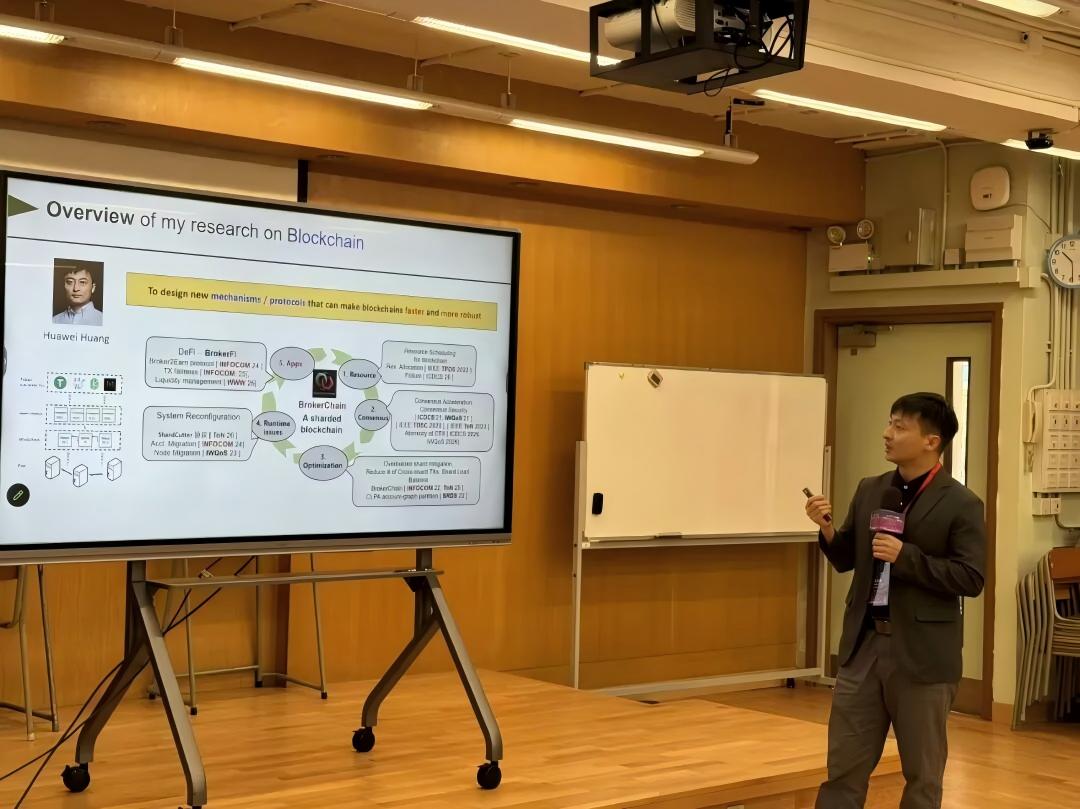
Prof. Huawei Huang presents research on AI-agent prediction markets and BrokerChain.
The third keynote speech was delivered by Assoc. Prof. Ata Jahangir Moshayedi of Dongguan University of Technology. Under the title “From Smart Agriculture to Intelligent Agro-Ecosystems: LLM-Based Robotic Systems for Next-Generation Sensing and Decision Support,” the presentation considered the use of large language models and robotic systems in agricultural sensing, environmental understanding and decision support. It also highlighted the potential of intelligent technologies to contribute to more integrated and responsive agricultural ecosystems.
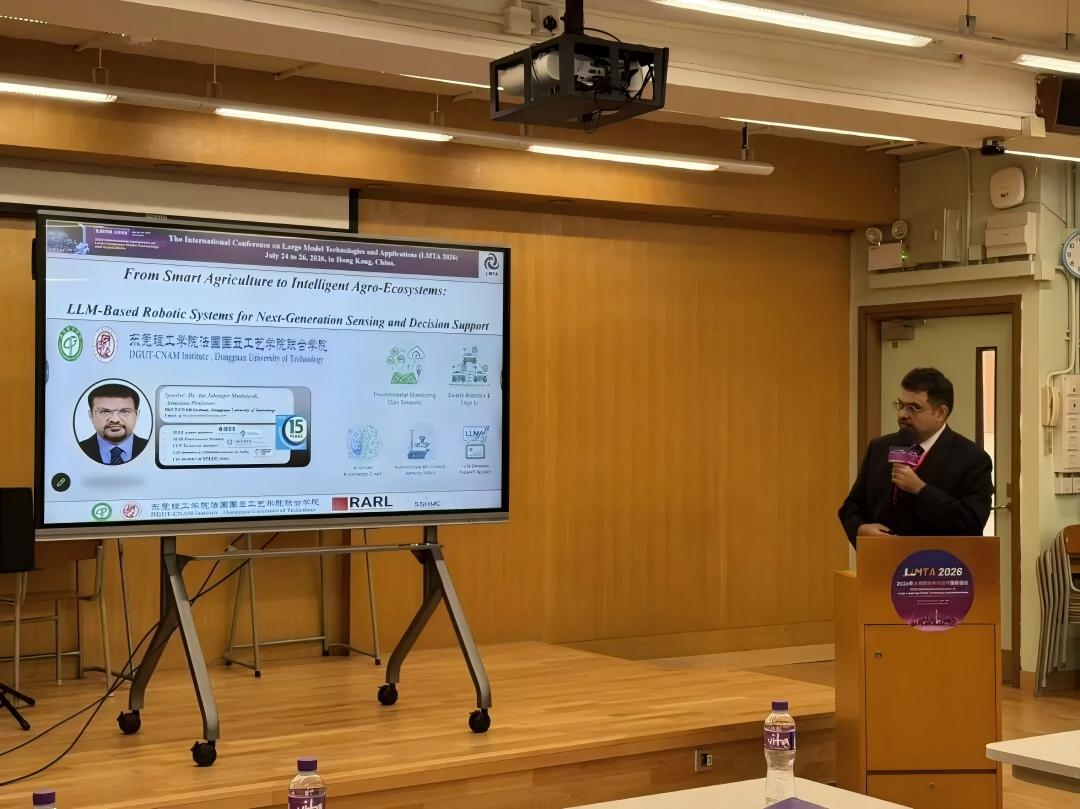
Assoc. Prof. Ata Jahangir Moshayedi speaks on LLM-based robotic systems for intelligent agro-ecosystems.
Invited Speeches on Cultural Heritage and Multimodal Music Generation
The invited speech session broadened the interdisciplinary scope of the conference. Assoc. Prof. Peipei Cui of Taiyuan University of Technology delivered a presentation on “AI-assisted Cultural Heritage Conservation and Restoration,” discussing how artificial intelligence can support the analysis, preservation and restoration of cultural heritage while complementing specialist knowledge and established conservation practices.
Lecturer Lili Liu of Taiyuan University of Technology presented “Multimodal-Guided Ethnic Music Generation: Exploration and Practice of the MusDiff Framework.” The presentation introduced an approach to ethnic music generation guided by multimodal information and demonstrated the possibilities of combining artificial intelligence with musical heritage, cultural expression and creative practice.
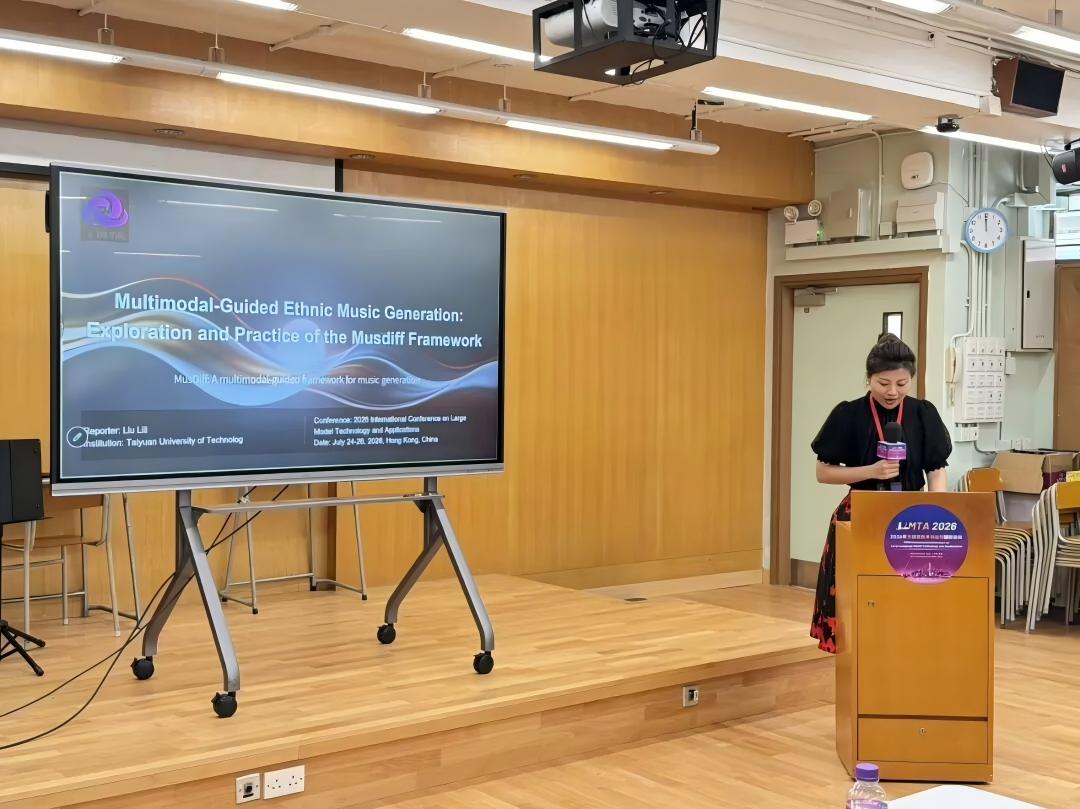
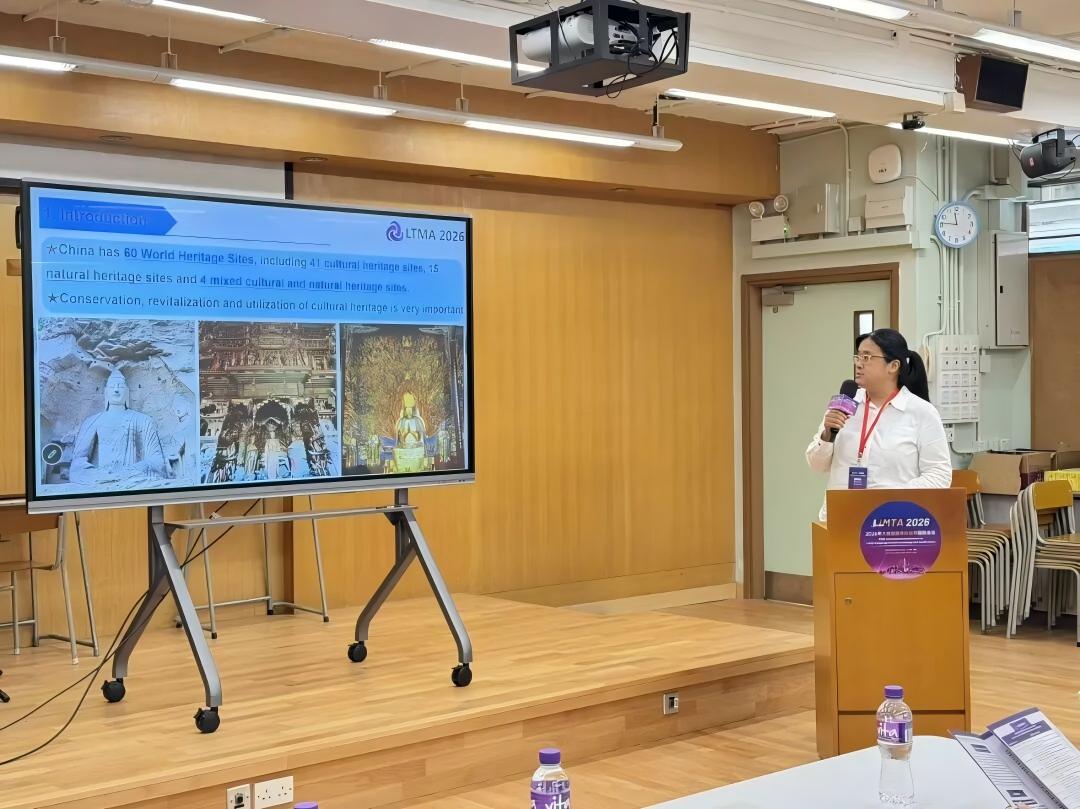
Invited speakers discuss AI-assisted cultural heritage conservation and multimodal-guided ethnic music generation.
Oral Presentations and Academic Exchange
During the afternoon programme, 21 oral presentations were delivered by researchers from universities and institutions including Nanchang Institute of Technology, Nanchang Normal College of Applied Technology, Nanfang College Guangzhou, Northwestern Polytechnical University, Shanghai International Studies University, Taiyuan University of Technology, Changsha University of Science and Technology, Southeast University, Wuxi Vocational College of Science and Technology, Politecnico di Milano, Zhejiang University and other institutions.
The presentations covered a range of research topics associated with intelligent computing, model development, multimodal systems, information processing and practical applications. Through concise presentations and focused discussion, participating researchers were able to share current findings, receive academic feedback and identify possibilities for future exchange and collaboration.
Poster displays were arranged during the two coffee breaks, enabling participants to continue discussions in a more informal setting. The hybrid format also allowed online attendees to take part in the programme and extended the conference’s academic reach beyond the physical venue.
Supporting Responsible and Application-Oriented AI Development
The academic discussions at LMTA 2026 reflected several major directions in the current development of artificial intelligence: the continued optimisation of large language model architectures; closer integration of language, vision, audio and embodied intelligence; the emergence of AI agents and autonomous systems; and the expansion of AI-enabled applications across science, industry, agriculture, education and culture.
Participants also recognised that technological progress must be accompanied by attention to safety, governance, evaluation and responsible use. As large language models become more deeply embedded in research and society, international and interdisciplinary dialogue will remain essential to ensuring that innovation is scientifically rigorous, socially meaningful and responsive to real-world needs.
As co-organiser, IAOA supported the conference’s international academic cooperation and wider visibility. The Alliance will continue to promote open scholarly exchange, interdisciplinary dialogue and institutional collaboration, while supporting academic platforms that connect emerging research with practical application and public value.
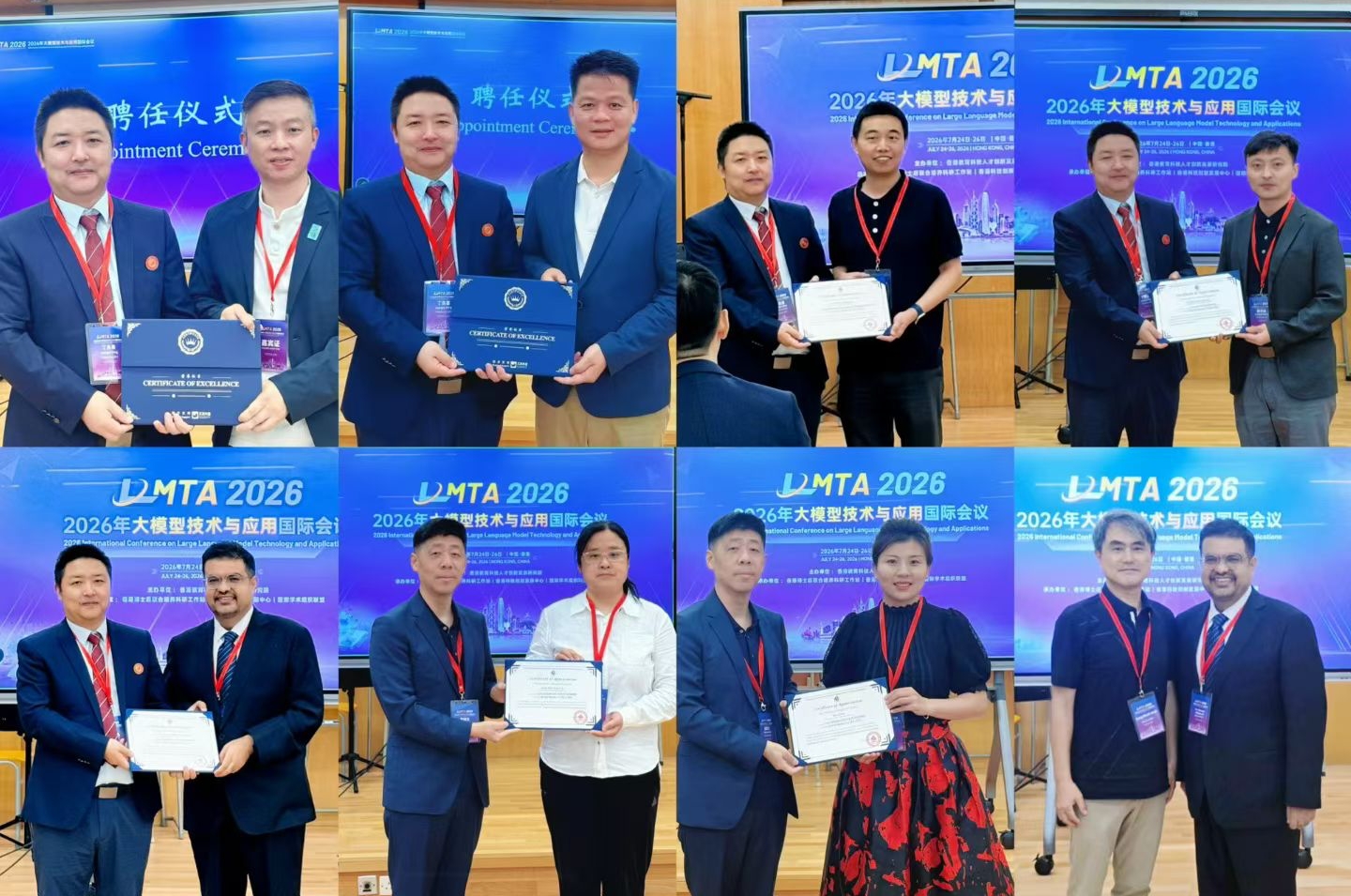
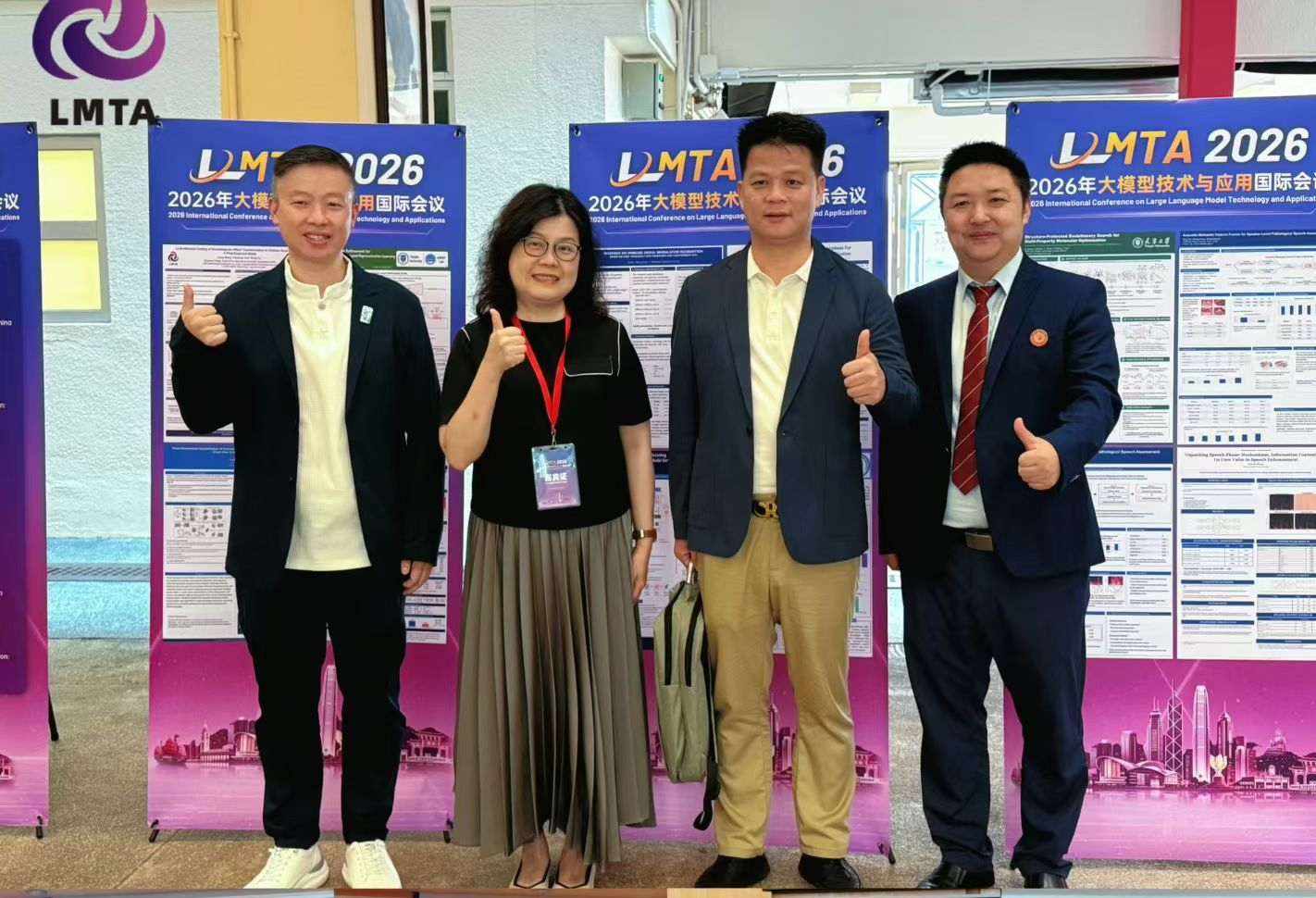
Academic exchange and closing activities at LMTA 2026.
A Platform for Continued Cooperation
The successful convening of LMTA 2026 provided a valuable platform for researchers and professionals to present new work, exchange perspectives and strengthen connections across institutions and disciplines. The conference demonstrated Hong Kong’s continuing role as a meeting point for academic research, technological innovation and international cooperation.
With the conclusion of the main programme, participants expressed their interest in maintaining communication and exploring further cooperation in research, academic events and the responsible application of artificial intelligence. LMTA 2026 therefore represented not only a concentrated programme of presentations, but also a starting point for continued dialogue on the future of large language model technology and its applications.
Related conference page: https://iaoalliance.org/Conferences/LMTA2026